

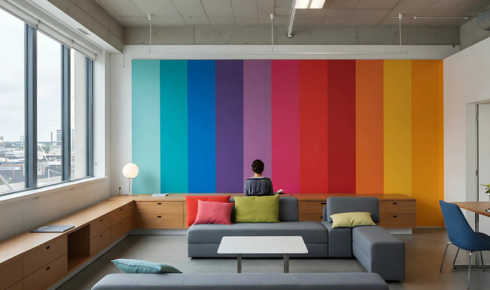


Colours quietly influence how a room feels, even if you don’t think about it consciously. Choosing shades with intention can support the mood you want in different spaces.
Soft blues, greens and muted neutrals are generally calming. They work well in bedrooms and reading corners where you want to relax or unwind. These colours don’t shout; they gently fade into the background and let your mind settle.
Warm tones—terracotta, mustard, warm beige—create a cosy, welcoming feel in living and dining areas. They’re great where you want conversation, connection and a sense of comfort.
Brighter pops of colour like yellow, teal or coral can energise workspaces or hobby rooms in small doses. You don’t need to paint all four walls—an accent wall, a piece of furniture or accessories can bring the effect.
For focus-heavy zones like study corners, avoid overly busy patterns and very stark contrast. Soft, even colours with good lighting help concentration better.
In the end, colour psychology is a guide, not a strict rulebook. Notice how you personally respond to certain hues and let that lead your choices.