
Most people don’t think much about water until it starts acting strange. A glass tastes metallic. The shower leaves your skin feeling tight. The coffee maker gets crusty faster than it used to. Or maybe the laundry comes out looking a little dull, like the colors gave up halfway through the wash. It’s easy to shrug these things off as “just water,” but water has a way of leaving clues. Quiet ones, mostly.
Clean-looking water is not always clean water. That’s the awkward truth. It can come out of the tap crystal clear and still carry minerals, metals, chemicals, or other unwanted substances you’d never notice by sight alone. And because water touches nearly everything in a home, cooking, bathing, cleaning, appliances, plumbing, it makes sense to understand what’s actually in it.
Why Clear Water Can Still Be Complicated
Water is a natural carrier. As it travels through soil, rock, pipes, treatment systems, and sometimes older plumbing, it picks things up along the way. Some of those things are harmless. Some are annoying. A few may be worth taking seriously.
For example, minerals like calcium and magnesium can create hard water. That may not sound dramatic, but over time it can lead to scale inside pipes, cloudy glassware, dry hair, and appliances that work harder than they should. Iron can leave reddish stains. Sulfur can bring that rotten-egg smell nobody wants near a kitchen sink. Chlorine can affect taste and odor, even when it’s doing its job as a disinfectant.
Then there are substances you may not detect at all without proper testing. Lead, nitrates, arsenic, PFAS, volatile organic compounds, and bacteria are not always obvious. Some have no taste. No smell. No warning sign. That’s why guessing based on appearance alone is a pretty weak strategy.
The First Number Many Homeowners Notice
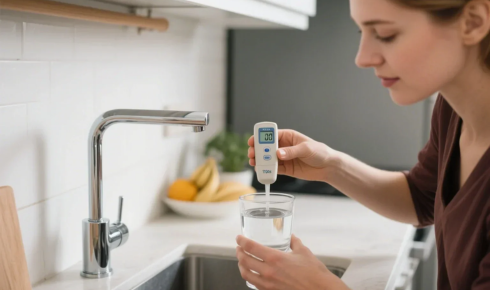
One common measurement people hear about during water testing is total dissolved solids. In plain English, it refers to the combined amount of dissolved minerals, salts, metals, and other tiny particles in water. A high reading doesn’t automatically mean the water is unsafe, but it does tell you there is a lot going on beneath the surface.
This number can be useful because it gives a quick snapshot of water’s overall mineral content. Still, it has limits. It won’t tell you exactly what those dissolved solids are. Two homes could have similar readings and completely different water concerns. One may have mostly harmless minerals, while another may need a closer look because of specific contaminants.
That’s where proper interpretation matters. A number without context can lead people in the wrong direction. Some homeowners rush to buy a filter after seeing a high reading, while others ignore it because the water tastes fine. Neither approach is ideal. Testing should guide decisions, not panic-buying or wishful thinking.
The Value of Reliable Testing
At-home test strips can be useful for a quick check, especially for basics like hardness, pH, or chlorine. They’re affordable and easy. But they’re not the final word. They can expire, react poorly to storage conditions, or give broad ranges instead of precise results.
For deeper answers, third-party lab testing is often the more trustworthy route. A certified lab can examine water for specific contaminants using controlled methods and proper equipment. That matters when health, compliance, or long-term treatment planning is involved.
It also removes some of the guesswork. Instead of wondering whether a smell is harmless or whether staining means iron, manganese, or something else, you get data you can actually use. And good data makes every next step easier, whether that means installing a softener, choosing a filtration system, treating a well, or simply confirming your current water is in good shape.
Not Every Water Problem Needs the Same Fix
This is where many people get caught. They assume one filter solves everything. It usually doesn’t.
A carbon filter may improve taste and reduce chlorine, but it won’t soften hard water. A water softener can handle hardness minerals, but it won’t remove every chemical contaminant. Reverse osmosis systems can reduce many dissolved substances, but they’re typically used at a specific tap rather than for every gallon entering the home. UV systems can help with microorganisms, but they don’t remove minerals or chemicals.
Water treatment is a bit like getting glasses. You don’t just grab a random pair from a shelf and hope they work. You test first, understand the issue, and then choose the right solution. Otherwise, you can spend money and still have the same problem sitting there, quietly annoying you.
When Deeper Detection Matters
Some water concerns are simple. Hardness, chlorine taste, and visible sediment are common and usually straightforward. But modern water issues can be more complicated, especially in areas near agriculture, older infrastructure, industrial activity, or private wells.
That’s where advanced contaminant detection becomes important. It helps identify substances that basic tests may miss, including trace-level contaminants that can still matter over time. For homeowners who rely on well water, have young children, notice recurring symptoms after using water, or live in an area with known environmental concerns, deeper screening can bring real peace of mind.
It’s not about being alarmist. It’s about being informed. Water quality changes from one neighborhood to the next, sometimes from one house to the next. Even two homes on the same street can have different results depending on plumbing materials, filtration history, or well depth.
Small Signs Worth Paying Attention To
A few everyday signs can suggest it’s time to test. White crust around faucets. Blue-green staining. A bitter or salty taste. Rotten-egg odor. Cloudiness that doesn’t clear. Frequent appliance repairs. Soap that refuses to lather properly. Skin that feels itchy after showers.
None of these signs proves there is a serious issue. But they do tell you something is worth checking. And honestly, testing is much easier than replacing a water heater, scrubbing stains every week, or worrying every time someone fills a glass.
A Smarter Way to Think About Water
The best approach is not fear. It’s routine awareness. Just like people check HVAC filters, inspect roofs, or service vehicles, water deserves a little attention too. Especially if your home uses a private well, has older pipes, or hasn’t had water tested in years.
Good water supports daily life in ways we barely notice. Better coffee. Cleaner dishes. Softer laundry. Healthier plumbing. Fewer mystery stains. A little more confidence when you turn on the tap.
In the end, water testing is not just about finding problems. Sometimes it confirms that things are fine, and that has value too. But when something is off, testing gives you a clear starting point. No guessing. No buying the wrong system. No pretending that strange taste is “probably nothing.”
Water may be quiet, but it’s rarely empty. The more you understand what’s in it, the better you can protect your home, your appliances, and the people who use it every single day.